Buying a home
Buying a home can feel confusing, especially if this is your first time or English is not your first language. DoorLine gives general education and helps you get matched, at no cost, with a licensed local real-estate agent you can compare and choose yourself.
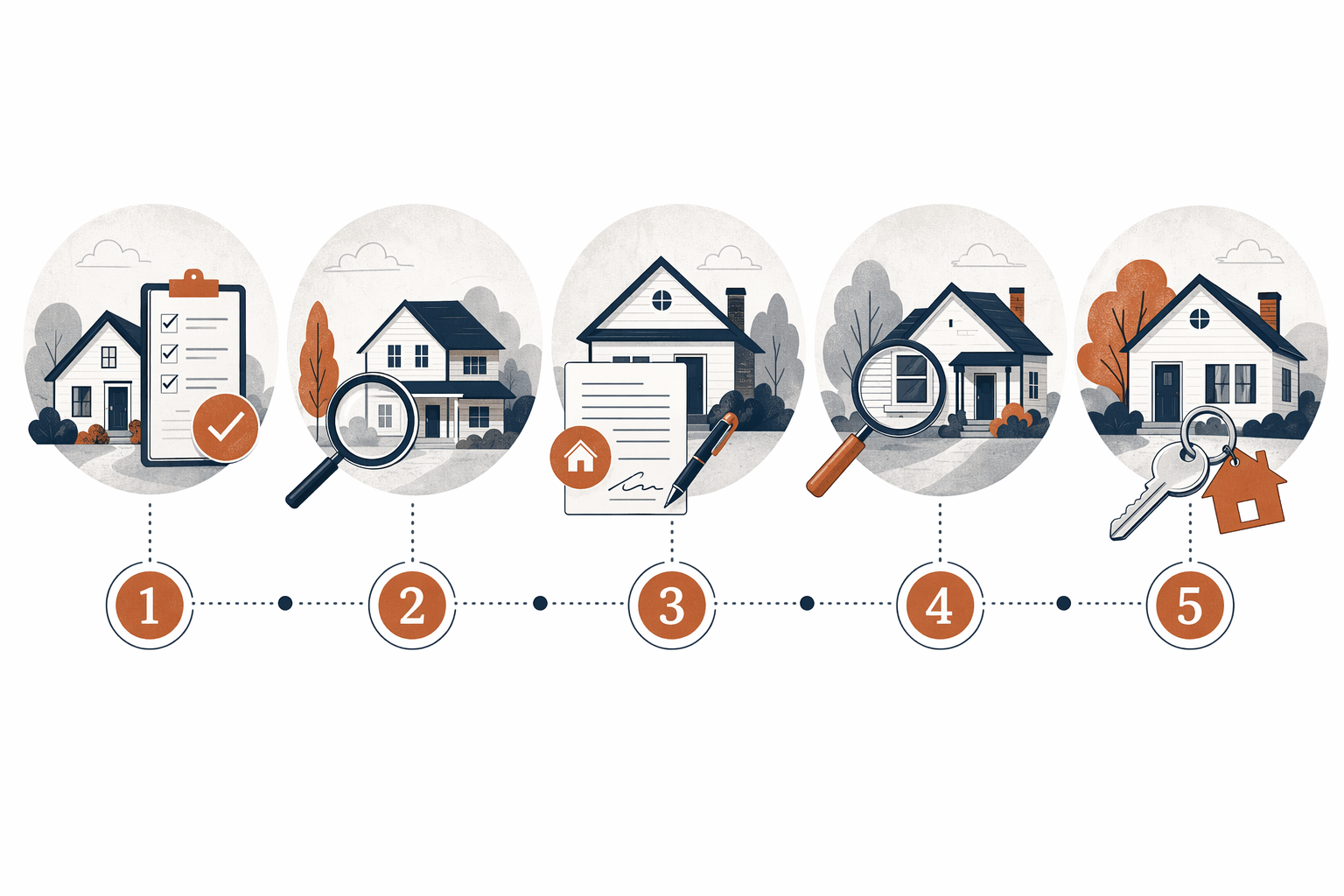
What buying a home really involves
Buying a home is not just finding a house you like. It is a step-by-step process with money deadlines, contract terms, inspections, and closing documents. If you do not understand the process, it is easy to feel rushed or sign something you did not mean to accept.
A licensed real-estate agent can explain local market steps, prepare and submit offers, help you understand deadlines, and coordinate with other parties. If you need a mortgage, you may also work with a licensed lender. In some states, you may also need a licensed attorney for parts of the closing process. Always verify licenses yourself and read every agreement and fee in writing before signing.
DoorLine is not a brokerage, lender, or law firm. We do not buy, sell, finance, or appraise homes, and we do not give legal, mortgage, tax, or financial advice. We provide general education and a free matching service so you can compare local agents and decide who, if anyone, you want to work with.
If you want a broader first-time overview, start with first-time home buyer guide or buying a home.
How the home-buying process usually works
Every transaction is different, but most buyers go through these steps:
1. Set a real budget
Think about the monthly payment, not just the price. Include property taxes, homeowners insurance, possible HOA dues, utilities, repairs, and moving costs. A home that looks affordable at first may not feel affordable every month.
2. Talk to a lender if you plan to borrow
Many buyers get preapproved before making offers. This can help you understand your price range and show a seller you are serious. Loan options, rates, and cash-to-close vary. Read the lender's terms carefully and compare.
3. Choose an agent carefully
You do not need to say yes to the first person you meet. Interview more than one licensed agent. Ask how they communicate, how they handle offers, what buyer agreement they use, and what fees apply.
4. Search for homes
Look at price, condition, commute, taxes, and practical needs. When thinking about neighborhoods, focus on lawful, objective factors like travel time, public information on schools, flood risk, noise, and nearby services. Do not let anyone steer you based on assumptions about who lives in an area. DoorLine supports all buyers and follows the Fair Housing Act.
5. Make an offer
Your offer may include price, contingencies, requested closing date, and any seller-paid costs you want to ask for. The seller can accept, reject, or counter.
6. Do inspections and final review
If your contract allows inspections, use that time well. General home inspections do not guarantee future condition, but they can reveal major issues. You may also need specialty inspections depending on the home and location.
7. Finalize financing and closing
Your lender, title company, and agent will coordinate documents and deadlines. Before sending any money, confirm wiring instructions by phone using a trusted number. Wire fraud is real.
Want help comparing agents? You can get matched for free.
What it usually costs to buy a home
The biggest mistake many buyers make is focusing only on the down payment. In real life, there are several moving parts.
Typical buyer costs may include:
- Down payment: often about 3% to 20% of the purchase price, depending on the loan and your situation
- Buyer closing costs: often about 2% to 5% of the purchase price
- Inspection fees: these vary by property and location
- Appraisal, lender, title, recording, and prepaid costs: often part of total closing costs
- Moving, repairs, furniture, and immediate maintenance: easy to underestimate
In some transactions, the seller may agree to pay some buyer costs, but that depends on the market, the contract, and negotiation. Nothing is guaranteed.
If you work with a buyer's agent, ask exactly how that agent is paid under your written agreement. In many markets, agent compensation has commonly been around 2.5% to 3% per side, often paid by the seller, but practices are changing and terms are increasingly negotiable. What matters is the written agreement in your transaction.
All numbers are typical ranges and estimates, not quotes or promises. Real costs depend on the home, the price, the location, the loan, and the agreement with the agent and other service providers. For a more detailed breakdown, see understanding closing costs and costs.
A realistic timeline from search to closing
Some buyers close in a few weeks. Others take several months. There is no one timeline that fits everyone.
A common rough timeline looks like this:
- 1-4 weeks: budget review, lender conversations, document gathering, agent interviews
- 2-12+ weeks: home search and tours
- A few days to a few weeks: offer, counteroffer, and contract negotiation
- 7-14 days often matter a lot: inspection period and follow-up requests, depending on the contract
- 3-6 weeks commonly: loan underwriting, appraisal, title work, and final approval
- Closing day: sign documents, pay your required funds, and get access according to the agreement
Delays happen. Appraisals can come in low. Repairs can become negotiation points. Title issues can appear. Loan conditions can take time. This is normal, but deadlines still matter.
Good buyers stay organized. Keep copies of disclosures, inspection reports, loan estimates, and the signed contract. Ask your agent and lender what the next deadline is every step of the way.
What to ask before you sign anything
Ask direct questions. A good professional should answer them clearly.
Ask a buyer's agent:
- Are you currently licensed in this state, and where can I verify it?
- Do you use a buyer representation agreement? For how long?
- What services are included, and what fees could I owe under the agreement?
- How will you send me listings and market updates?
- How quickly do you usually respond when a home I like appears?
- How do you handle multiple-offer situations?
- Can you explain contingencies, deadlines, and risks in plain language?
Ask a lender if you need financing:
- What loan programs might fit my situation?
- What down payment range is possible for me?
- What is my estimated cash to close?
- Are there points, origination charges, or other lender fees?
- How long does your average closing take?
Before you sign:
- Read the full agreement, not just the summary
- Check how long the contract lasts and how cancellation works
- Confirm every fee and payment responsibility in writing
- Ask for translated explanations if English is not your first language
- Never send money until you have confirmed instructions by phone
If you are early in the process, how to choose a real-estate agent can help you compare people more confidently.
Your rights as a buyer
You have the right to be treated fairly and to make your own choices.
Under the Fair Housing Act, housing discrimination is illegal. No one should guide you toward or away from a neighborhood, home, or service provider because of race, color, religion, sex, disability, familial status, national origin, or another protected characteristic under applicable law. When discussing areas, keep the conversation on objective factors like price, commute, property condition, taxes, and publicly available amenities. DoorLine welcomes all buyers and sellers and follows the Fair Housing Act.
You also have the right to:
- Compare agents instead of feeling pressured to use one person
- Choose whether to sign a representation agreement
- Ask questions until you understand the process
- Review disclosures and deadlines before making decisions
- Verify licenses yourself for agents, lenders, inspectors, and attorneys where needed
- Confirm fees in writing before you agree to anything
If something feels rushed, confusing, or too good to be true, slow down. A home purchase is too important for guesswork. Learn more at your fair housing rights.
How DoorLine helps without charging you
DoorLine is built for people who want clear information and real choices. That includes first-time buyers, new immigrants, ITIN buyers, and people who prefer help in a language they understand.
What we do:
- Share general, plain-English education about how buying works
- Help match you, for free, with licensed local real-estate agents
- Let you compare options and choose who to contact
- Support multilingual communication needs when possible
What we do not do:
- We do not act as your agent, broker, lender, attorney, or tax advisor
- We do not promise approval, savings, or a successful closing
- We do not charge consumers for matching
Participating agents pay DoorLine a flat marketing fee for advertising and matching services. That is not a cut of your sale and not a commission split.
You stay in control. You compare agents. You choose who to work with. You read and confirm every agreement. If you want to start, use get matched.
Buying a home takes planning, paperwork, and careful review of costs and contracts. DoorLine gives general education and matches you for free with licensed local agents, so you can compare your options, choose who to work with, and move forward more confidently.