Selling a home
Selling a home is not just putting a sign in the yard. It is pricing, prep, marketing, showings, negotiation, contracts, inspections, and closing — and small mistakes can cost real money.
What DoorLine does — and what we do not do
DoorLine is a free matching service. We help you understand the selling process in plain English and get matched with licensed local real-estate agents you can compare and choose from. Participating agents pay DoorLine a flat marketing fee. You do not pay DoorLine to get matched.
We are not a real-estate brokerage, agent, lender, attorney, or tax advisor. That means we do not list homes, negotiate your sale, give legal or tax advice, or handle your money. Our information is general and educational.
If you want help comparing agents, start here: get matched. If you want a broader overview of the process, see selling a home.
Always work with a licensed real-estate agent, and where needed a licensed attorney, lender, or tax professional. Verify licenses yourself and read every agreement and fee in writing before you sign.
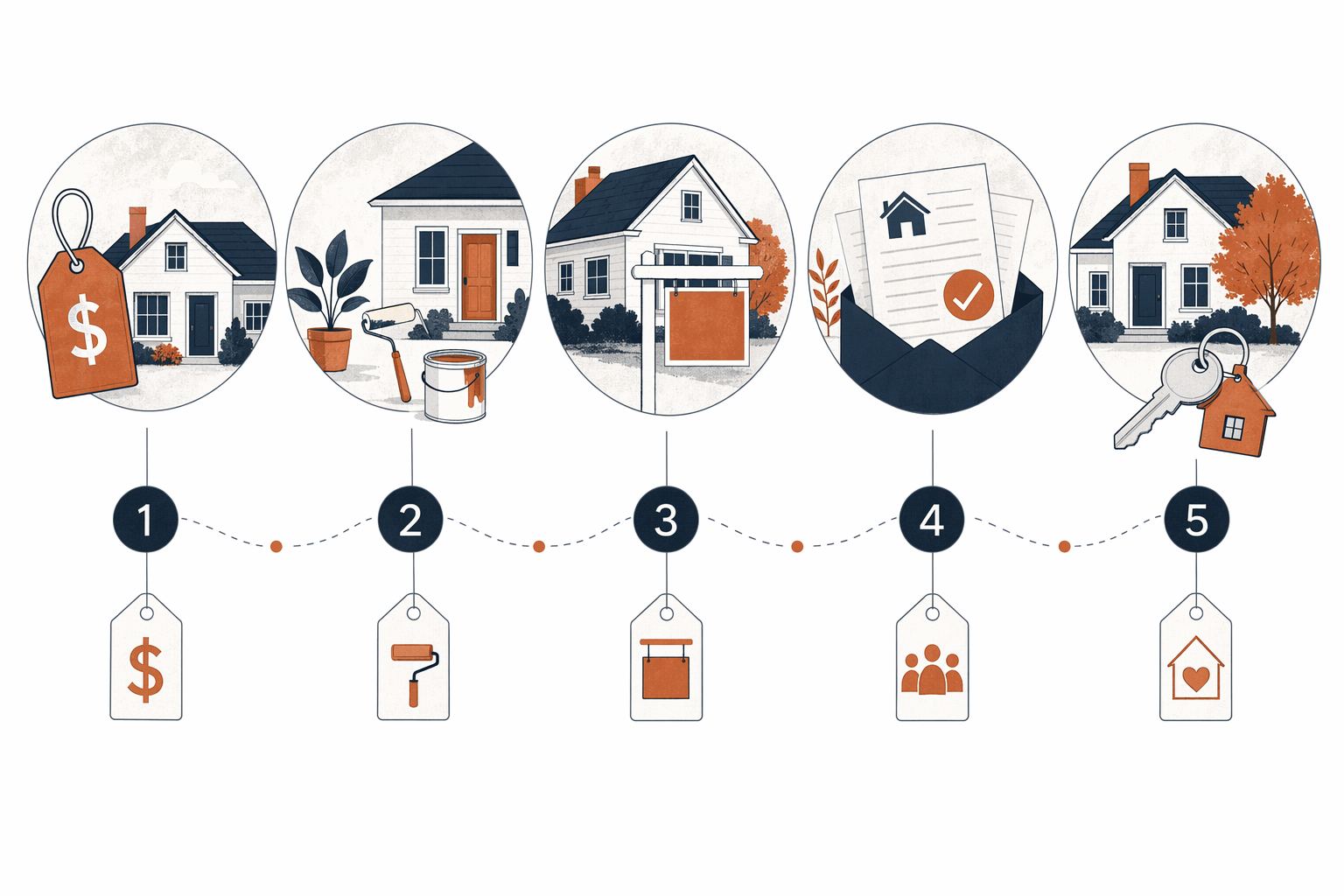
How selling a home usually works
Most sales follow the same basic path, but the exact steps depend on the home, the market, your timing, and the agreement with your agent.
- Choose an agent and sign a listing agreement. Read the agreement carefully. Check how long it lasts, what services are included, and how compensation works.
- Set a price. A good agent should show you recent comparable sales, current competition, and realistic pricing logic. Pricing too high can cause your home to sit and then sell for less later.
- Prepare the home. This may include cleaning, decluttering, light repairs, paint, yard work, and staging.
- List and market the home. That can include photos, online marketing, open houses, private showings, and outreach to buyers' agents.
- Review offers. Price matters, but so do financing, contingencies, closing date, repair requests, and the buyer's ability to perform.
- Negotiate and sign a contract. Get all terms in writing. Verbal promises do not protect you.
- Inspection, appraisal, and title work. The buyer may ask for repairs or credits. If the buyer has a loan, the lender may require an appraisal.
- Final closing. You sign documents, pay closing costs from sale proceeds, and transfer ownership.
A strong agent helps keep the deal moving when problems come up. Common examples are low appraisals, title issues, repair disputes, financing delays, or a buyer who asks for too much after inspection.
What it can cost to sell
Selling is not free, and the total is often more than owners expect. Real numbers depend on the home, the sale price, the location, what work the home needs, the buyer's financing, and the written agreement with your agent.
Typical seller costs may include:
- Agent compensation: often negotiated in the listing agreement. In many markets, agent compensation has commonly been around 2.5% to 3% per side, but this is not fixed and can vary.
- Seller closing costs: often about 1% to 3% of the sale price.
- Repairs or buyer credits: highly variable.
- Staging, cleaning, landscaping, paint, or moving costs: optional but common.
- Mortgage payoff: if you still owe money on the home.
Example, just to make the math real: on a $400,000 sale, seller closing costs at 1% to 3% could be about $4,000 to $12,000, before any agent compensation, repairs, or prep work. That is only an estimate, not a quote.
Ask every agent you interview to show you a net sheet. That is a rough estimate of what you might walk away with after typical costs. Compare the assumptions behind each estimate.
For a plain-English breakdown of fees, read understanding closing costs or costs.
Timeline: how long selling can take
Some homes sell fast. Others take months. The timeline depends on price, condition, location, season, buyer demand, mortgage rates, and how many similar homes are on the market.
A realistic timeline often looks like this:
- 1-3 weeks before listing: choose an agent, sign paperwork, clean up, make small repairs, take photos, and prepare marketing
- Days to several weeks on market: showings and offer review
- 30-45 days after contract: common closing period when the buyer is using a mortgage
- Faster or slower: cash deals may close sooner; financing, title, or repair issues can push closing back
If you need to sell and buy around the same time, say that early. The right strategy may be different if you need extra time after closing, a rent-back, or a specific move date.
Do not let anyone promise a timeline they cannot control. A good agent should explain the plan, the risks, and backup options.
What to ask before you hire an agent
Interview more than one. You are not just hiring someone to unlock doors. You are hiring someone to price correctly, protect your time, communicate well, and keep a deal together.
Ask questions like these:
- How did you choose your suggested list price? Ask to see comparable sales and current competition.
- What is your marketing plan? Photos, online exposure, open houses, showings, follow-up, and communication.
- How often will you update me? Ask who will actually answer calls and messages.
- What is in the listing agreement? Length, cancellation terms, any fees, and what services are included.
- What repairs or updates do you think are worth doing — and what is probably not worth the money?
- How will you handle multiple offers or a low appraisal?
- Can you give me a rough net sheet and explain the assumptions?
Watch for red flags:
- They avoid putting fees or promises in writing.
- They pressure you to sign immediately.
- They throw out a very high price with weak evidence.
- They do not explain the contract clearly.
- They are hard to reach before you even hire them.
If you want help comparing options, read how to choose a real-estate agent.
Your rights, your choices, and Fair Housing
You stay in control. You compare agents. You choose who to work with. You read and confirm every agreement before signing.
You also have rights under fair housing law. DoorLine welcomes all buyers and sellers and follows the Fair Housing Act. That means we do not steer people based on race, color, religion, sex, disability, familial status, national origin, or any other protected characteristic.
When you evaluate a neighborhood for market value or buyer demand, focus on objective factors like price trends, commute, lot size, home condition, taxes, school information from public sources, and nearby amenities. Avoid assumptions about who lives in an area or who a home is "for."
Read more here: your fair housing rights.
Also protect yourself from fraud:
- Confirm your agent's license yourself.
- Read the listing agreement and closing documents carefully.
- Confirm every fee in writing.
- If money will move by wire, always confirm wiring instructions by phone using a trusted number. Email fraud is real.
A practical plan for sellers
If you are thinking about selling in the next 3 to 12 months, start with a simple plan.
- Get clear on your goal. Best price, fastest sale, lowest stress, or a specific move date.
- Talk to a few licensed agents. Compare price strategy, communication style, and fees in writing.
- Ask for a prep plan. What to fix now, what to leave alone, and what may help photos and showings.
- Review your estimated costs. Include payoff, closing costs, possible repairs, moving, and timing.
- Choose your agent and timeline. Only after you understand the agreement.
DoorLine makes this easier by helping you get matched with licensed local agents at no cost to you. You can compare your options and decide what feels right.
If you are ready for the next step, get matched.
Selling a home usually means choosing a licensed agent, setting a realistic price, preparing the home, reviewing offers, and paying closing costs at the end. DoorLine can help you compare licensed local agents for free, but you should verify licenses yourself and read every agreement and fee in writing before you sign.