The first-time home buyer guide
Buying your first home can feel exciting and confusing at the same time. This guide explains the process in plain English so you can ask better questions, avoid expensive mistakes, and decide your next step with confidence.
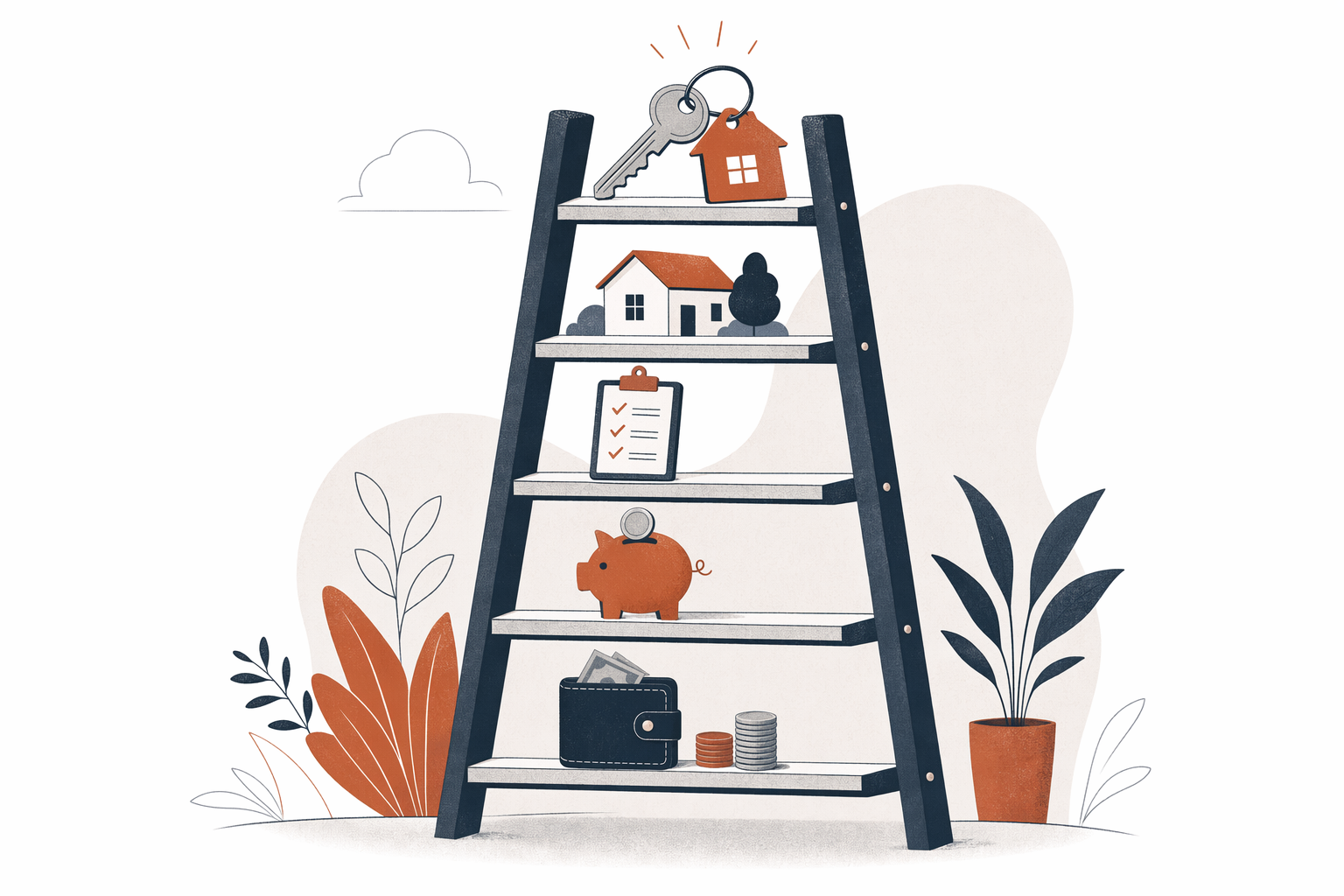
What first-time buyers should know before they start
A first home is not just about the house. It is also about monthly payment, closing costs, repairs, timing, and paperwork. Many buyers focus only on the listing price and get surprised later.
A few honest basics:
- Down payment is often about 3% to 20% of the purchase price, depending on the loan and your situation.
- Buyer closing costs are often about 2% to 5% of the price. These can include lender fees, title-related charges, prepaid taxes and insurance, and other costs.
- Your monthly housing cost usually includes more than the loan payment. It may also include property taxes, homeowners insurance, mortgage insurance, HOA dues, and utilities.
- A home may need repairs right away. Even a home that looks clean can have issues with the roof, plumbing, electrical, drainage, or HVAC.
If you are new to the US system, use an ITIN, speak a language other than English, or are buying for the first time, that does not mean homeownership is off limits. It does mean you should slow down, ask questions, and work with licensed professionals who explain things clearly.
DoorLine is a free matching service. We do not act as a brokerage, lender, or law firm, and we do not give legal, mortgage, or tax advice. We help you understand the process and get matched with a licensed local real-estate agent you can compare and choose for yourself. You can also review our broader buying a home resources if you want a simple overview first.
Know your budget before you look at homes
A lot of first-time buyers make the same mistake: they shop by emotion first and numbers second. That can waste time and lead to disappointment.
Start with the payment you can live with comfortably, not the highest number someone says you might qualify for. A useful budget should leave room for normal life: groceries, childcare, transportation, healthcare, savings, and emergencies.
Think through these costs:
- Down payment: often 3% to 20%.
- Closing costs: often 2% to 5% of the price.
- Move-in money: deposits, movers, furniture, basic repairs, appliances, locks, and cleaning.
- Monthly housing cost: principal, interest, taxes, insurance, possible HOA dues, and possible mortgage insurance.
- Repair cushion: homes break. Water heaters fail. Air conditioners stop. Roofs age.
Before you make offers, many buyers choose to talk with a licensed lender about preapproval. That can help you understand a realistic price range and what documents may be needed. Preapproval is not a guarantee, and final numbers depend on the home, the loan, the location, and the terms you agree to.
If you want a simple breakdown of common buyer expenses, see closing costs explained and financing basics.
Always read every fee and loan term in writing before signing anything. If money will be wired at closing, confirm wiring instructions by phone using a trusted number before sending funds. Wire fraud is real.
What to do step by step
You do not need to do everything at once. A simple order helps.
- Set your real budget. Decide what monthly payment feels safe, not just possible.
- Talk to a licensed lender if you plan to finance. Ask what loan types may fit your situation and what cash you would likely need up front.
- Choose a licensed local real-estate agent carefully. You are hiring help, not giving up control. Ask how they communicate, how they explain contracts, and how they handle inspections, negotiations, and deadlines.
- Start touring with a plan. Compare homes based on price, condition, commute, layout, taxes, and ongoing costs. Do not assume a cheaper home is the better deal if it needs major work.
- Make an offer with terms you understand. Price matters, but so do inspection timelines, financing terms, closing date, and any seller credits.
- Do inspections and review documents. Inspections do not make a home perfect, but they can reveal major issues before you are fully committed.
- Review final numbers before closing. Ask questions until you understand what you owe, what the seller may be paying, and what happens on closing day.
A good agent should help explain the process in plain language. You should still read and confirm every agreement and fee in writing yourself. If you need help finding someone to compare, you can get matched with a licensed local agent at no cost.
How to choose the right agent without getting pushed around
Not every agent is the right fit for a first-time buyer. Some are patient teachers. Some are not. You want someone who answers questions directly and respects your pace.
Look for an agent who:
- Explains forms and deadlines in plain English
- Responds within a reasonable time
- Knows your target area and price range
- Respects your budget instead of pushing you higher
- Talks honestly about property condition, resale risk, and total cost
- Does not pressure you to waive protections you do not understand
Ask questions like:
- How do you help first-time buyers understand contracts?
- How often will we talk, and by text, phone, or email?
- What happens if the inspection finds problems?
- How is your compensation handled under the agreement?
- What parts of the process should I expect to pay for myself?
Agent compensation and buyer agreements can vary by market and by agreement. In many transactions, agent compensation has commonly been around 2.5% to 3% per side, often paid by the seller, but this is increasingly negotiable and not guaranteed. Terms should always be reviewed in writing before you sign.
DoorLine follows the Fair Housing Act. All buyers are welcome. We do not steer people based on race, color, religion, sex, disability, familial status, national origin, or any other protected class. When comparing areas, focus on lawful, objective factors like commute, price, property taxes, public data on schools, and nearby amenities, not assumptions about who lives there. You can read more about how to choose a real-estate agent and your Fair Housing rights.
Common first-time buyer mistakes that cost real money
Most bad outcomes do not come from one huge mistake. They come from a series of small rushed decisions.
Here are common problems to avoid:
- Shopping before budgeting. Falling in love with homes above your comfort zone can lead to bad decisions later.
- Ignoring total monthly cost. Taxes, insurance, HOA dues, and mortgage insurance can change the real payment a lot.
- Using all your cash for the down payment. If you empty your savings, one repair can become a crisis.
- Skipping inspections without understanding the risk. In a competitive market, buyers can feel pressure to move fast. Know what protections you are giving up before you agree.
- Focusing only on cosmetic updates. New paint and staged furniture can hide old systems and deferred maintenance.
- Not reading the contract. Deadlines and fees matter. Ask for plain-language explanations.
- Sending money without verifying instructions. Always confirm wire details by phone with a trusted number.
- Choosing the first agent you talk to. Compare communication style, experience, and how well they explain things.
One more thing: do not assume a seller will pay every cost, and do not assume they will pay none. Credits, concessions, and contract terms vary. Real numbers depend on the home, the price, the location, the loan, and the agreement between the parties.
Your next step
If you are serious about buying within the next year, your next move is simple:
- Get clear on your budget
- Learn the major costs
- Compare licensed local agents
- Choose who you want to work with
You do not need to know everything before you begin. You just need enough information to avoid getting rushed, confused, or overcommitted.
DoorLine is here to help you understand the process and compare your options. Our matching service is free to consumers. Participating agents pay DoorLine a flat marketing fee. You stay in control: you compare agents, you choose who to work with, and you read and confirm every agreement yourself.
If you want help taking the next step, start with our first-time buyer resources or get matched to connect with a licensed local agent.
Start with your budget, learn the real costs, and compare licensed local agents before you commit. DoorLine can match you for free, but you stay in control and should verify licenses, read every agreement, and confirm wiring details by phone before sending money.