How real-estate agents are paid
Agent pay can feel confusing because the money often shows up on a closing statement, not as a simple upfront bill. Here is the plain-English version of how it commonly works, what is negotiable, and what you should confirm in writing before you agree to anything.
The short answer
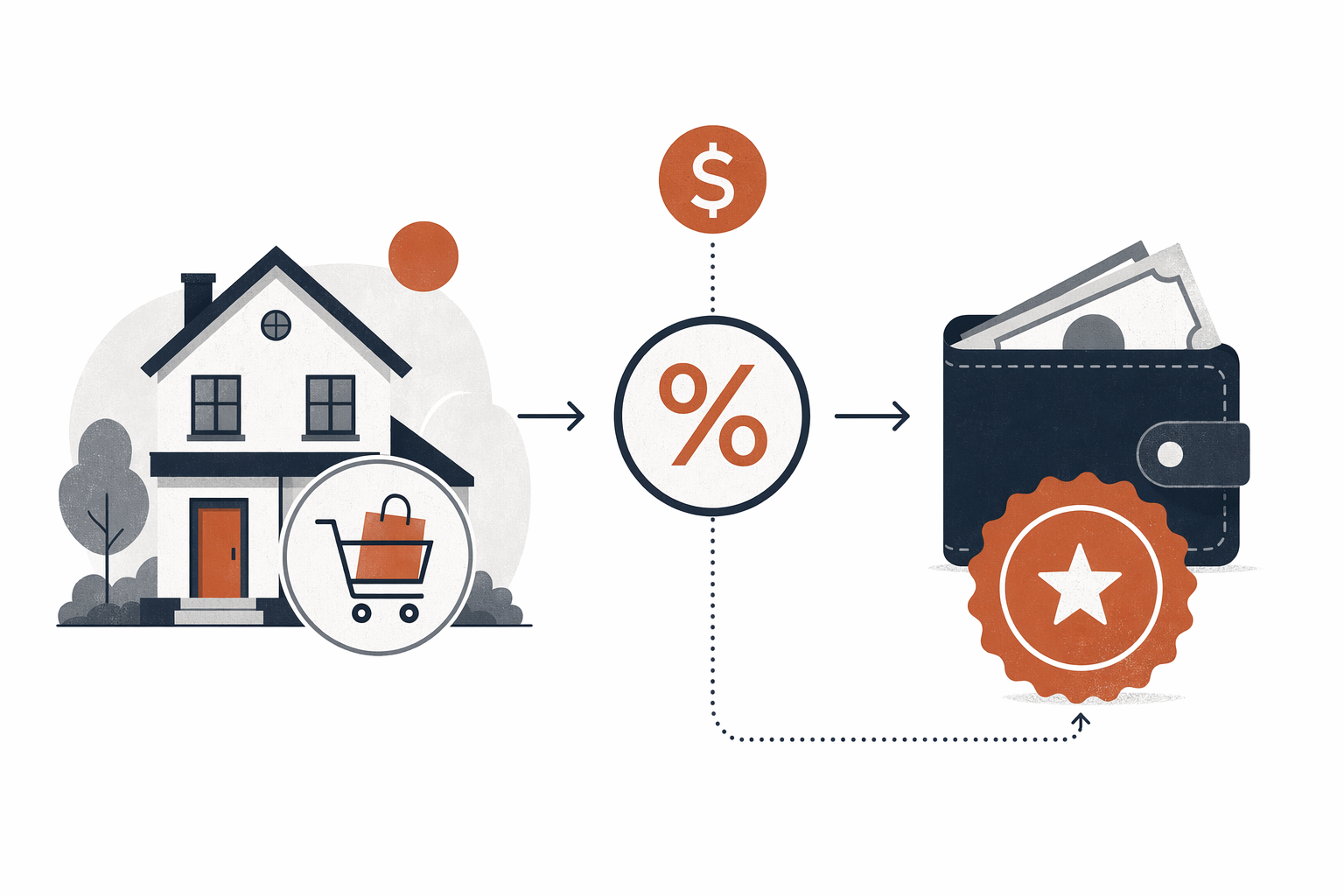
In many home sales, real-estate agents are paid from the transaction at closing. That does not mean the cost is automatic, fixed, or the same in every deal. Terms can vary by market, property, and the agreement you sign.
For sellers, the listing agreement often says what the listing agent will be paid and whether any amount may be offered to a buyer's agent. For buyers, the amount your agent is paid may come from the seller, the listing broker, your own written agreement, or a combination depending on the deal and local practice.
A common range people still hear is about 2.5% to 3% per side, but that is only a typical range, not a rule, quote, or guarantee. Commissions are increasingly negotiable. The real number depends on the home, the price, the location, the services provided, and the agreement with the agent.
Your total cash to close is also broader than agent pay. Buyers often have closing costs of about 2% to 5% of the purchase price. Sellers often have closing costs of about 1% to 3%, plus any agreed agent compensation. If you want a fuller breakdown, read understanding closing costs and our overview of costs.
How payment usually works for sellers and buyers
For sellers
If you are selling, you usually sign a listing agreement with a licensed real-estate agent or brokerage. That agreement should clearly say:
- what services the agent will provide
- how the agent or brokerage is paid
- whether any amount may be offered to a buyer's agent
- when payment is due
- whether there are any additional marketing or admin fees
- how long the agreement lasts and how cancellation works
In many sales, the agreed amount is paid at closing from the seller's proceeds. But you should never assume the terms are standard. Read the agreement line by line and ask questions until you understand every fee.
For buyers
If you are buying, your agent may ask you to sign a buyer representation agreement. That agreement should explain:
- what the agent will do for you
- how long the agreement lasts
- whether the agent expects a certain compensation amount
- what happens if the seller or listing side offers less than that amount
- whether you could be responsible for any difference
- how you can end the agreement
This part matters. Some buyers think, "My agent is free." Sometimes the buyer does not pay money directly out of pocket for agent compensation. But that is not something to assume. The only safe answer is the written agreement plus the specific terms of the deal.
DoorLine is a free matching service. We do not act as your agent, brokerage, lender, attorney, or tax advisor, and we do not give legal or financial advice. We help you get matched with licensed local agents so you can compare options and choose who to work with.
What is negotiable, and what is not safe to assume
A lot of people get into trouble because they treat real-estate fees like a law of nature. They are not.
Usually negotiable:
- the agent's compensation
- the length of the agreement
- what services are included
- whether professional photos, staging help, open houses, or extra marketing are included
- whether there are added admin, transaction, or marketing fees
- cancellation terms
Not safe to assume:
- That every agent charges the same thing. They do not.
- That a buyer's agent is always paid by the seller. Sometimes yes, sometimes no, sometimes partly.
- That the lowest fee is the best deal. Lower cost can be good, but compare service, experience, communication, and contract terms too.
- That verbal promises count. If it matters, it needs to be in writing.
- That closing costs and agent pay are the same thing. They are related, but separate.
If you are a first-time buyer, an ITIN buyer, a new immigrant, or simply buying in your second language, slow the process down. Ask for plain-language explanations. Bring a trusted interpreter if needed. Review everything before you sign. Our first-time home buyer guide and first-time buyers page can help you prepare questions.
DoorLine follows the Fair Housing Act. All buyers and sellers are welcome. We do not match people based on race, color, religion, sex, disability, familial status, national origin, or any other protected trait. Learn more about your fair housing rights.
What to do before you sign with any agent
Use this checklist before you agree to work with someone.
- Verify the agent's license yourself. Check your state's official licensing database.
- Read the full agreement. Do not rely on a text message or quick summary.
- Ask how the agent is paid in your specific situation. Ask for the answer in writing.
- Ask whether you could owe anything directly. This is especially important for buyers.
- Ask about extra fees. Admin fees, transaction fees, marketing fees, cancellation fees, and minimum fees can surprise people.
- Compare at least two or three agents if you can. Compare service, availability, local knowledge, and contract terms, not just price.
- Confirm what happens if the deal falls through. Usually compensation is tied to closing, but confirm the exact terms.
- Keep copies of everything. Agreements, amendments, fee disclosures, and emails.
If you want help finding licensed local agents to compare, you can get matched. The matching service is free to consumers. Participating agents pay DoorLine a flat marketing fee, not a share of your sale.
Where money is moving, use extra caution. Wire fraud is real. Always confirm wiring instructions by calling a verified phone number before sending funds. Do not rely only on email.
Common mistakes that cost people money
Here are the mistakes we see again and again.
- Signing fast because you feel pressure. A good agent should be willing to explain the agreement.
- Focusing only on commission. A slightly higher fee may come with stronger marketing, better negotiation, or fewer add-on charges. Or it may not. Compare the full package.
- Ignoring the term length. A long contract can be a problem if communication is poor.
- Missing the buyer agreement details. Some buyers do not realize they may be responsible for part of their agent's compensation depending on the agreement and the transaction.
- Not asking about seller concessions or credits. In some deals, negotiated credits can affect your cash needed at closing, but exact options depend on the property, loan, and contract terms.
- Assuming everyone explains things clearly. Many people nod along even when they are confused. Stop and ask again.
A solid agent should welcome questions like:
- "What exactly do I owe, if anything, and when?"
- "What fees are separate from your compensation?"
- "If I want to cancel, how does that work?"
- "What services are included for this fee?"
- "Can you show me where that is written in the agreement?"
If you are buying, it also helps to understand the bigger picture of loans, cash to close, and monthly payment. Start with financing basics so you know what questions to ask your licensed lender.
The next step: compare, choose, and confirm in writing
You do not need to memorize every real-estate rule before you start. You do need to protect yourself.
Do this next:
- Learn the basic process for buying a home or selling.
- Talk to more than one licensed local agent when possible.
- Ask each agent to explain compensation and fees in plain English.
- Verify licenses yourself.
- Read every agreement before signing.
- Confirm all fees, services, and timelines in writing.
The best setup is simple: you understand the agreement, you know who gets paid, you know when, and you know whether you might owe anything directly. That clarity can save you stress and expensive surprises later.
Agent pay is not one fixed rule. Ask exactly how your agent gets paid, whether you could owe anything yourself, and what extra fees exist. Compare licensed agents, verify the license yourself, and read every agreement before you sign.