Renting vs Buying — Which Makes Sense for You
There is no “correct” answer for everyone. **Renting can be the smart move. Buying can be the smart move.** It depends on your money, your timeline, your job, and how much responsibility you want right now.
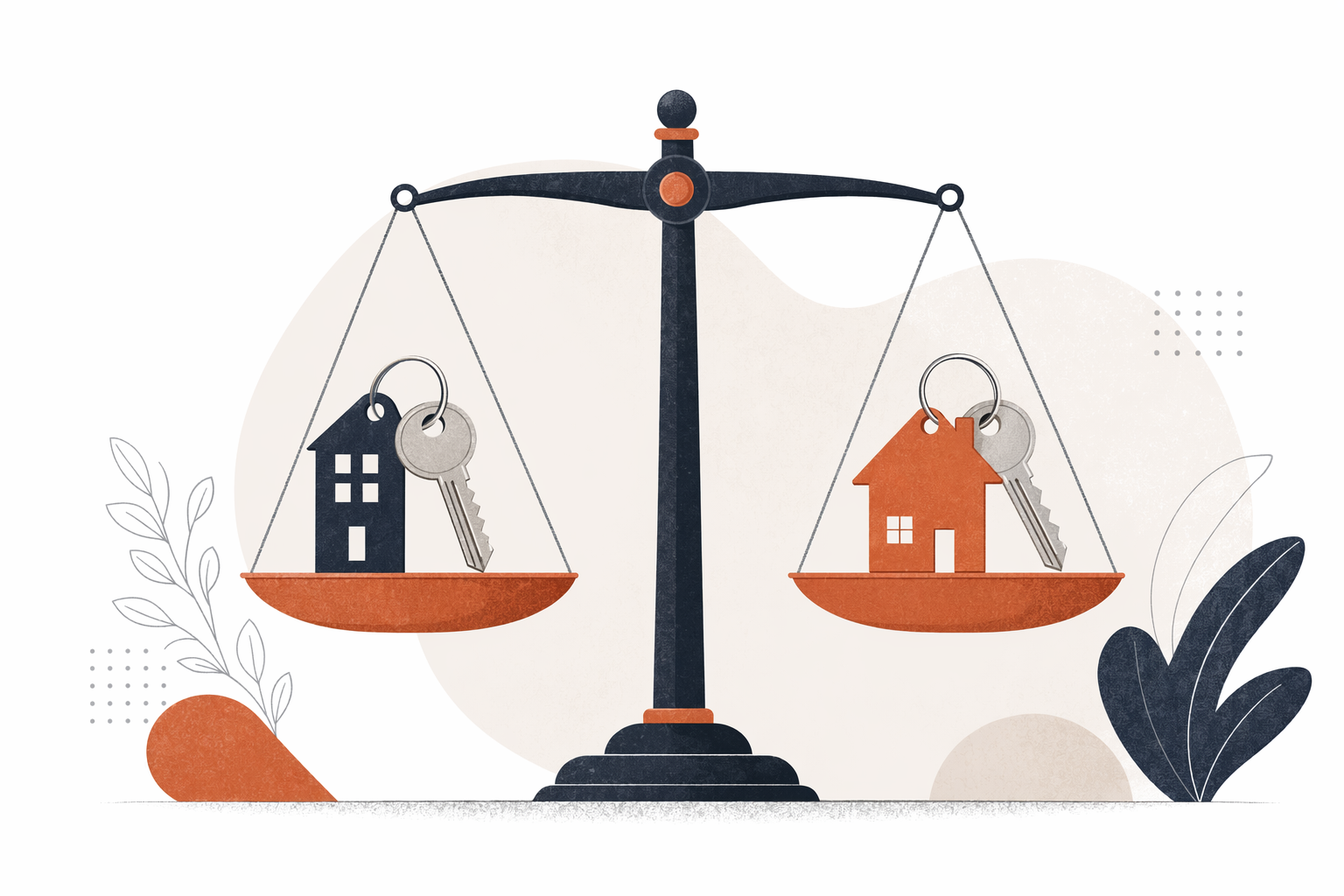
Start with the truth: buying is not always better
A lot of people are told that renting is “throwing money away.” That is too simple.
When you rent, you pay for a place to live without taking on repair bills, property taxes, or the risk of home prices changing. When you buy, part of your monthly payment may build equity over time, but you also take on more costs and more risk.
A home is both a place to live and a long-term financial commitment. It can work well if you plan to stay put, have room in your budget, and are ready for ongoing costs. It can be a bad fit if your income is unstable, you may move soon, or you are stretching every dollar just to get the keys.
For many first-time buyers, the real question is not “Can I buy?” but “Can I buy comfortably and still handle repairs, moving costs, and surprises?” That is the better question.
If you want a step-by-step overview of the process, see first-time buyer basics or buying a home.
Renting vs buying: the practical comparison
Here is the plain-English version.
- Upfront cash
- Renting: usually a security deposit, first month’s rent, application fees, and moving costs.
- Buying: usually a down payment, buyer closing costs, earnest money, inspections, and moving costs. Typical down payments are about 3-20% depending on the loan and buyer. Buyer closing costs are often about 2-5% of the price. Real numbers depend on the home, the price, the location, the loan, and your written agreement.
- Monthly payment
- Renting: usually more predictable in the short term, though rent can rise when the lease renews.
- Buying: your mortgage payment may be stable with a fixed-rate loan, but total housing cost also includes taxes, insurance, utilities, maintenance, and possibly HOA dues.
- Repairs and maintenance
- Renting: the landlord usually handles major repairs, depending on the lease and local law.
- Buying: you handle repairs. That means the water heater, roof, plumbing leak, appliance failure, and yard work can become your problem and your bill.
- Flexibility
- Renting: easier to move when a job changes, family needs change, or you are not sure where you want to stay.
- Buying: better if you expect to stay several years. Selling too soon can make buying less worthwhile because of transaction costs.
- Control
- Renting: less control over paint colors, renovations, pets, or lease renewals.
- Buying: more control over the property, within local rules and any HOA rules.
- Long-term upside and risk
- Renting: less exposure to home-price changes.
- Buying: you may build equity over time, but home values do not go up on a fixed schedule. Markets change.
A good way to compare is to look at your total monthly housing cost, not just rent versus principal and interest. Include everything you will really pay.
Buying may make sense if these things are true
Buying is often worth a closer look if most of these points fit your life:
- You expect to stay put for a while. Many buyers look at a time frame of several years, not one or two.
- You have cash beyond the minimum needed to close. Not just the down payment. Also closing costs, moving costs, and an emergency cushion.
- Your monthly payment would still feel manageable after taxes, insurance, utilities, maintenance, and any HOA dues.
- Your job and income are reasonably stable. Perfect certainty is not required. But buying is easier when your income is not changing every month.
- You want more control over the home. Maybe you want to paint, renovate, garden, or keep the home long term.
- You are ready for responsibility. A homeowner does not call a landlord when something breaks.
Renting may make more sense if any of these are true:
- You may move within the next few years.
- You are still building savings.
- Your income is variable and the payment would be tight.
- You are paying off other high-priority debt.
- You do not want repair risk right now.
- You are new to an area and want time to learn commute times, prices, and amenities before choosing where to buy.
None of this means you are “behind.” Sometimes renting for one more year is the move that puts you in a much stronger buying position later.
Watch the hidden costs and the emotional pressure
People often focus on the listing price or the rent amount and miss the costs around it.
With renting, watch for:
- Rent increases at renewal
- Utility costs not included in rent
- Parking, pet, storage, and move-in fees
- Penalties for breaking a lease early
With buying, watch for:
- Inspection and appraisal-related costs
- Buyer closing costs, often about 2-5%
- Property taxes and homeowners insurance
- Private mortgage insurance in some loans
- Repairs in the first year
- HOA fees or special assessments where applicable
- Seller-paid costs and agent compensation terms that are negotiable and must be confirmed in writing
Also watch for pressure. Some people are pushed into buying before they are ready because they are told rates will rise, prices will rise, or renting is a waste. Maybe. Maybe not. Do not buy because someone else wants you to buy.
Work with a licensed real-estate agent and, if needed, a licensed lender or attorney. Verify any license yourself. Read every agreement and fee carefully before signing. If money will be wired, confirm wiring instructions by phone using a trusted number to help avoid wire fraud.
For a clearer breakdown of buyer costs, read understanding closing costs or cost basics.
A simple next step: decide with real numbers, not guesses
If you are stuck, do this:
- Write down your real monthly budget. Include debt, childcare, transportation, food, savings, and a repair cushion.
- Compare your current rent to a full ownership estimate. Include mortgage, taxes, insurance, maintenance, HOA, and utilities.
- Think about your timeline. If you may relocate soon, renting may protect your flexibility.
- List your reasons. Do you want stability, more space, control, or just less uncertainty? Be honest.
- Talk to a local licensed agent before you decide. A good agent can explain the local process, common costs, and what homes in your budget really look like. You compare agents and choose who to work with.
DoorLine is a free matching service. We share general educational information and can help you get matched with a licensed local real-estate agent. We are not a brokerage, lender, or law firm, and we do not give legal, tax, mortgage, or financial advice.
All buyers and sellers are welcome. DoorLine follows the Fair Housing Act. If you want help finding an agent and asking the right questions, start here: get matched or read how to choose a real-estate agent.
If buying would leave you stressed, short on savings, or likely to move soon, renting may be the smarter choice for now. If you have stable income, enough cash for upfront costs and surprises, and plan to stay several years, buying may be worth a closer look.