Buyer's Agent vs Listing Agent
These two jobs sound similar, but they work for different clients and protect different interests. Here’s the simple version, what each agent usually does, and what to check before you sign anything.
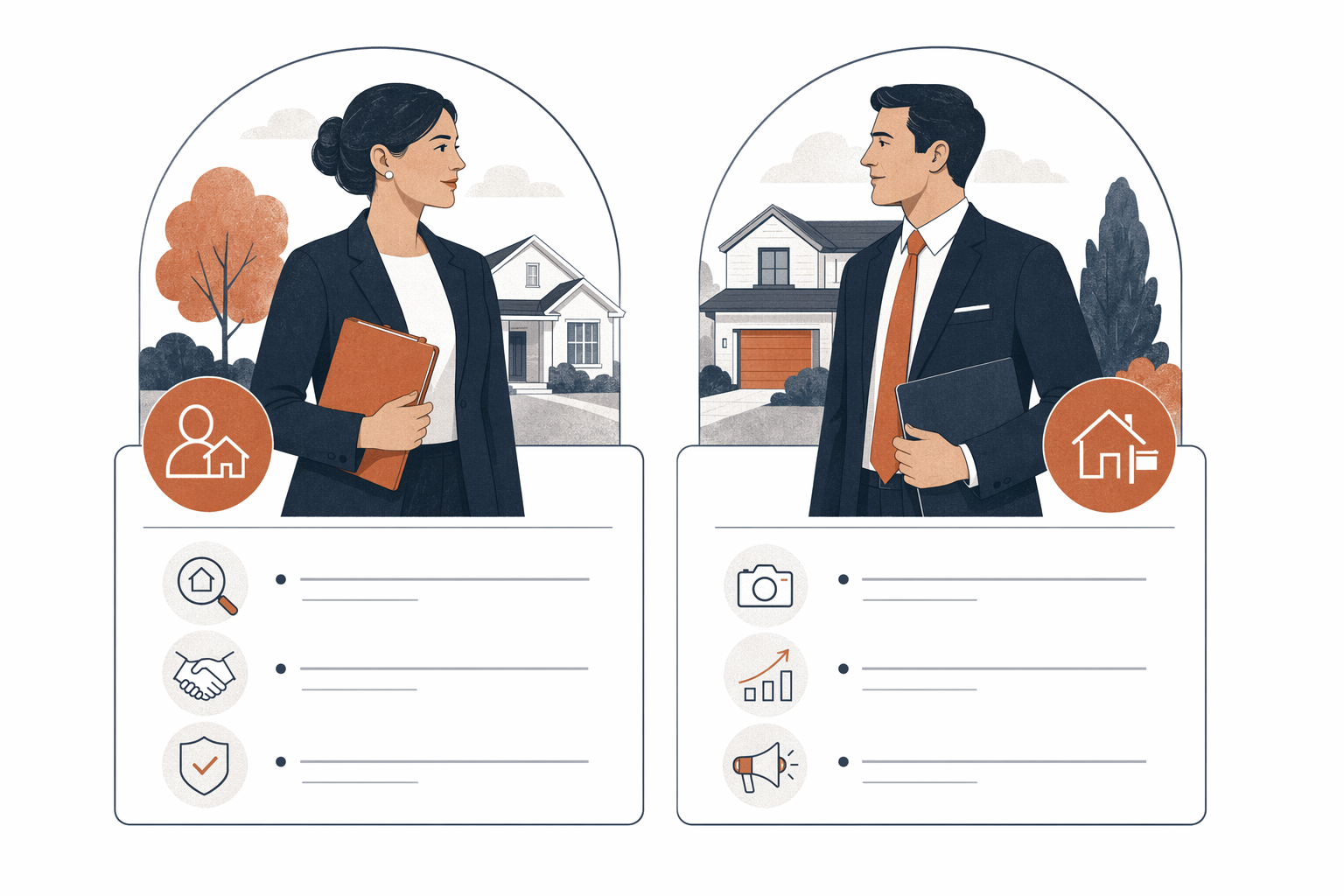
What is the difference?
A buyer's agent works with the buyer. A listing agent works with the seller. That is the big difference.
If you are buying a home, a buyer's agent helps you search, understand the local market, prepare offers, negotiate terms, track deadlines, and get to closing. If you are selling, a listing agent helps you price the home, market it, manage showings, review offers, negotiate terms, and move the sale toward closing.
Both should be licensed real-estate agents under state law. But they do not do the same job, and they do not owe the same duties to the same person.
A simple way to think about it:
- Buyer's agent: helps the buyer make an informed offer and purchase.
- Listing agent: helps the seller market the home and evaluate offers.
- Same transaction, different side: they may work on the same deal, but they represent different interests unless a separate agency arrangement is clearly disclosed and allowed.
If you are new to the process, start with the basics on buying a home or selling a home. DoorLine is a free matching service. We do not act as your broker, agent, lender, attorney, or tax advisor. We help you compare licensed local agents so you choose who to work with.
Side-by-side: what each agent usually does
Here is the honest comparison most people need before they start calling agents.
Buyer's agent
- Explains the buying process in general terms and helps you plan your next steps.
- Helps you search for homes that fit your budget, timing, commute, and other lawful, objective needs.
- Points out market facts like recent comparable sales, inventory, and days on market.
- Helps write and present offers.
- Negotiates price and terms for the buyer.
- Helps coordinate inspections, appraisal timing, financing deadlines, and closing tasks.
- Should explain what their services cost and what agreement you are signing.
Listing agent
- Helps the seller prepare the home for market.
- Recommends a pricing strategy based on local market data.
- Creates the listing, marketing plan, showing process, and offer-review plan.
- Communicates with buyer agents and interested buyers.
- Helps the seller compare offers, not just by price but also financing, contingencies, and timing.
- Negotiates price and terms for the seller.
- Helps manage inspection requests, appraisal issues, and closing steps.
What about pay?
Agent pay is negotiable and set by agreement. In many transactions, each side's agent is commonly paid around 2.5% to 3%, but that is only a typical range, not a rule or promise. Real numbers depend on the home, the price, the location, and the written agreement.
For buyers, it is important to ask early whether you may sign a buyer representation agreement and how compensation works in your market. For sellers, ask exactly what services are included and what costs you may pay at closing. Closing costs are also estimates, not guarantees. Buyers often pay about 2% to 5% of the purchase price in buyer closing costs. Sellers often pay about 1% to 3% in seller closing costs, plus any agent compensation they agreed to in writing. Learn more at understanding closing costs and costs.
Which one is right for you?
The right answer depends on your goal.
You probably need a buyer's agent if:
- You want help searching and comparing homes.
- You are a first-time buyer, moving to a new area, or buying with an ITIN.
- You want someone to explain offer terms, inspections, and deadlines in plain language.
- You want help spotting deal risks, like a low appraisal, repair issues, or unclear seller disclosures.
You probably need a listing agent if:
- You own the home and want to sell.
- You need help pricing the home and deciding when to list.
- You want a plan for photos, showings, offers, and negotiation.
- You want help reviewing offers with different financing, contingencies, and closing dates.
Can one agent help both sides?
Sometimes state law allows forms of dual or limited representation, but the rules vary by state and can limit how much advice the agent can give each side. If that ever comes up, read the disclosure carefully and ask questions before signing. Many buyers and sellers prefer separate representation so each side has its own advocate.
DoorLine follows the Fair Housing Act. We welcome all buyers and sellers and do not steer people based on race, color, religion, sex, disability, familial status, national origin, or other protected classes. When you compare agents or neighborhoods, focus on lawful, objective factors like price, taxes, commute, school data, and amenities. You can read more about your fair housing rights.
How to choose carefully and avoid common problems
A good agent can save you stress. A bad one can cost you time, money, or both. Use this checklist.
- Verify the license yourself. Check the state licensing database. Do not rely only on a business card or social profile.
- Ask who the agent represents. Buyer, seller, or both under a special arrangement. Get it in writing.
- Read the agreement. Look at the length of the contract, cancellation terms, compensation, services included, and any extra fees.
- Ask how they communicate. If English is not your first language, ask whether they can explain terms clearly in your preferred language or with translated support.
- Ask for a realistic plan. Buyers should ask how the agent helps with search, offers, inspections, and closing. Sellers should ask about pricing, marketing, showing strategy, and offer review.
- Compare more than one agent. You do not have to hire the first person you speak with.
Common red flags:
- Pressuring you to sign fast.
- Avoiding direct answers about cost or contract terms.
- Promising a price, timeline, or outcome they cannot guarantee.
- Telling you a neighborhood is better or worse for a type of person instead of discussing objective facts.
- Asking for sensitive personal information DoorLine never needs, like Social Security numbers or bank account details.
If money will move at closing, use extra care. Wire fraud is real. Always confirm wiring instructions by phone using a trusted number before sending money.
Next step: compare licensed local agents for free
You do not need to guess. You can compare licensed local agents and choose the one that fits your situation.
DoorLine is a free matching service for home buyers and sellers in the US, including first-time buyers, new immigrants, ITIN buyers, and non-native-English speakers. Participating agents pay DoorLine a flat marketing fee to be included. There is no cost to you to get matched.
What you share should stay simple:
- Your contact information
- Whether you are buying, selling, or both
- Your city or area
- Your timeline and basic goals
Then you compare, you ask questions, and you choose whether to work with any agent. Before signing, confirm every service, fee, and term in writing. If financing is part of your plan, work with a licensed lender and review loan terms carefully. If you need legal or tax guidance, talk to a licensed attorney or tax professional.
Ready to start? Get matched or read how to choose a real-estate agent first.
If you are buying, a buyer's agent usually helps on your side. If you are selling, a listing agent usually helps on your side. Compare licensed agents, verify the license yourself, read every agreement, confirm costs in writing, and be careful with wiring instructions.