How to read a neighborhood
A house can change. The location does not. If you are buying or selling, it helps to know how to look at a neighborhood with clear eyes, using facts instead of guesses.
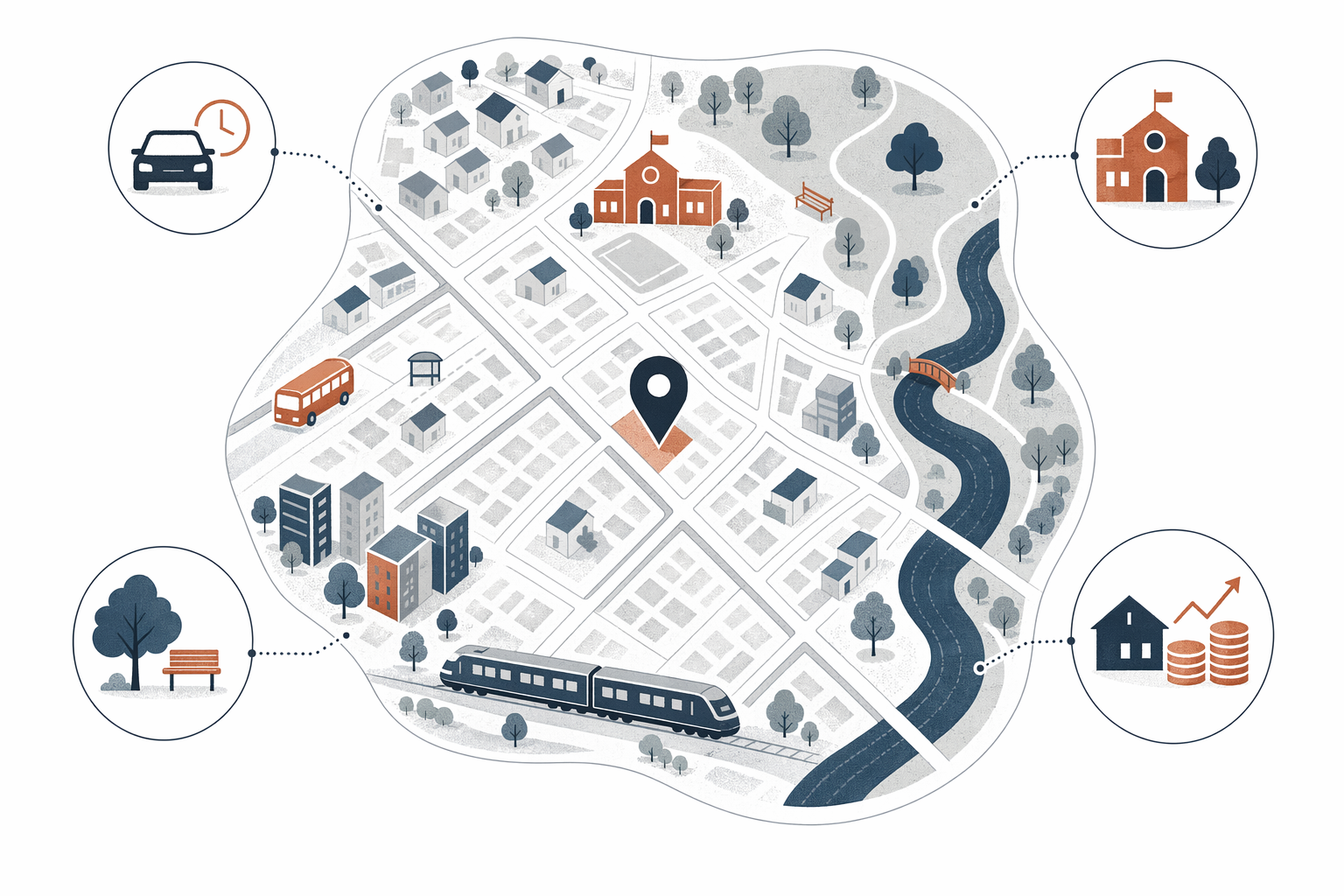
Start with facts, not assumptions
When people say a neighborhood is "good" or "bad," that usually means they are mixing together price, convenience, condition, noise, and their own personal preferences. That is not enough for a smart home decision.
A better approach is simple: look at objective things you can measure. For example:
- Typical home prices and recent sale prices
- Property taxes and any HOA dues
- Commute time to work, school, or family
- Public data on schools, parks, transit, and services
- Street noise, traffic, parking, and lighting
- Flood risk, wildfire risk, or other local hazards
- Nearby stores, medical care, and everyday needs
- How well homes are maintained
This matters whether you are buying or selling. Buyers want a home that fits real life. Sellers want to understand how buyers may compare their area with nearby options.
Just as important: do not make decisions based on assumptions about who lives in an area. Under the Fair Housing Act, all buyers and sellers are welcome. Focus on lawful, practical factors only. If you want a simple overview of your rights, read your fair housing rights.
The main things to check when you visit
Online research helps, but it is not enough. You should visit the area more than once if you can.
Here is what to notice:
- Noise: Stand outside for a few minutes. Listen for highways, train tracks, bars, dogs, planes, school pickup traffic, or late-night activity.
- Traffic and parking: Is it easy to turn in and out? Is street parking crowded? Are there commercial vehicles, school buses, or rush-hour backups?
- Condition of the area: Look at sidewalks, drainage, streetlights, landscaping, and how homes and buildings are maintained. One messy yard is not the story. Look for the overall pattern.
- Everyday convenience: Time the drive to work, grocery stores, pharmacy, childcare, parks, and medical care. A map may say 15 minutes. Real life may say 35.
- Safety-related basics: Are crosswalks visible? Are streets well lit? Is there heavy speeding? Do you see places where water pools after rain?
- Cell service and internet options: This can matter a lot if you work from home.
If you are serious about a home, try visiting at different times:
- Morning rush hour
- Midday
- Evening
- Weekend
The same block can feel very different at each time. A quiet street at 2 p.m. may be a cut-through road at 8 a.m. A calm Saturday may hide weekday parking problems.
Use public data to understand value
A neighborhood is not just a feeling. It also affects cost and future resale.
Start with a few practical questions:
- What have similar homes sold for nearby in the last 3-6 months?
- Are prices rising, flat, or dropping?
- How long do homes usually stay on the market?
- Are there lots of price cuts?
- What are the annual property taxes?
- Is there an HOA? If yes, what are the dues and rules?
For buyers, these numbers help you avoid paying based on emotion alone. For sellers, they help you understand how buyers may judge your location compared with nearby listings.
Also check public information that affects monthly cost:
- Property tax history
- Insurance costs, especially in flood, storm, or wildfire-prone areas
- Special assessments or local improvement charges if they apply
- Zoning and nearby land use, such as future road work, apartments, warehouses, or commercial projects
If you are early in the process, it also helps to understand the full cost of buying, not just the list price. Buyer closing costs are often around 2-5% of the price, and down payments commonly range from 3-20%, depending on the loan and buyer profile. Those are typical ranges, not promises. Real numbers depend on the home, price, location, loan, and your agreement with the professionals you hire. DoorLine shares general education only. For a bigger picture, see buying a home and understanding closing costs.
What buyers and sellers often miss
People get into trouble when they focus too much on the kitchen and not enough on the block.
Common mistakes include:
- Trusting one visit. One sunny afternoon does not tell you what weekday traffic, weekend noise, or overnight parking looks like.
- Looking only at the home's price. A cheaper home with higher taxes, HOA dues, flood insurance, or a long commute may cost more each month.
- Ignoring future changes. New construction, road changes, or zoning updates can affect noise, views, and resale.
- Assuming online ratings tell the whole story. Public data can be useful, but one website score should not make your decision.
- Using stereotypes instead of facts. This can lead to bad decisions and can cross fair housing lines. Focus on what you can verify.
- For sellers: pricing as if your block is identical to the nicest nearby area. Buyers compare carefully. Small location differences can matter.
Another big one: do not skip professional help. Work with a licensed real-estate agent, verify the license yourself, and read every agreement and fee in writing before you sign. If financing is involved, work with a licensed lender too. DoorLine is a free matching service, not a brokerage, lender, or legal or tax advisor.
A simple plan you can use this week
If you want to read a neighborhood like a smart buyer or seller, use this checklist.
- Pick 3-5 areas to compare. Do not fall in love with one street too early.
- Set your real-life priorities. Commute, monthly cost, parking, transit, quiet, walkability, and access to daily needs are common ones.
- Check recent sales and current listings. Compare similar homes, not fantasy examples.
- Visit more than once. Go at different times and different days.
- Talk through tradeoffs with a licensed local agent. Ask for facts, not vague opinions.
- Review total costs. Include taxes, insurance, HOA dues, repairs, and closing costs.
- Read every document carefully. Confirm what is included, what is excluded, and every fee in writing.
If money will move at any point, use extra caution. Wire fraud is real. Confirm wiring instructions by phone using a trusted number before sending money.
If you want help finding a local licensed agent who can walk you through neighborhoods in plain language, DoorLine can help you compare options. The service is free to you. Participating agents pay a flat marketing fee to DoorLine. You choose who to speak with and whether to move forward. Start here: get matched or learn more about how to choose a real-estate agent.
Do not judge a neighborhood by rumors or one quick visit. Compare real costs, commute, noise, upkeep, public data, and daily convenience, then work with a licensed local agent you choose and verify before you sign anything.